It sometimes happens that, even against principles, even against liberty, equality, and fraternity, even against universal suffrage, even against the government of all by all, from the depths of its anguish, of its discouragements, of its privations, of its fevers, of its distresses, of its miasmas, of its ignorance, of its darkness, that great madman, the rabble, protests, and the populace gives battle to the people.
There are some people, my dear, who hate advice, and, on the whole, do you know, I rather think they are right.
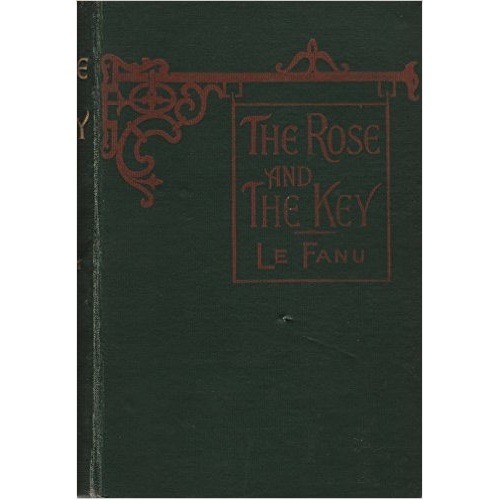
Joseph Sheridan Le Fanu, The Rose and the Key
Elvis Depressedly – “A Bible in a Bath of Bleach” Mickey’s Dead
A minimal yet tone-rich album that sounds like it was recorded in a bedroom, Mickey’s Dead finds a middle ground somewhere between Sparklehorse and Midlake circa Bamnan and Silvercork. And despite the sad-sack trappings of the band’s name, the album’s name, and the song’s name, this isn’t some weepy tale of woe. (NB: be prepared to turn down the volume for the wash of distortion at the end) (bandcamp)
The name Joseph Sheridan Le Fanu is one that, today, hardly produces even a twinkling of recognition in the most word-worn eye. The author was, however, quite popular at the time he was most actively writing – the 3rd quarter of the 19th century – and he was, in particular, well known for his gothic romances. The genre was summed up fairly adequately by a friend of Vonnegut’s: “a girl takes a job in an old house and gets the pants scared off her” – but within that general framework there is much room for variation, as The Rose and the Key shows.
Uncle Silas is the most lauded of his books along these lines (though Carmilla gets love too) , and perhaps rightly so: of his novels I’ve read, Wylder’s Hand is entertaining but let down by unsatisfying villainy, and The Rose and the Key is, while similar to Uncle Silas in some ways, very different in tone. It is, however, a very entertaining frog-in-the-pot experience, effectively hiding the machinations and malice that mark the antagonists of gothic romances from the eye of both the reader and the main character.