
He was twice witty, first with his own wit, then with the wit which was attributed to him.
Victor Hugo, Les Miserables
Black Forest/Black Sea – “Sevastopol”
Black Forest/Black Sea
An album of freaky chamber folk, before the band went a bit more digital. The cello/guitar combo makes it sound like an Espers backing track, but the off-kilter melody and confidently atonal background noise set it apart. An unpredictable band, for good and ill.
“Old books? The devil take them!” Goby said.
“Fresh every day must be my books and bread.”
Nature herself approves the Goby rule
And gives us every moment a fresh fool.
Ambrose Bierce, The Devil’s Dictionary
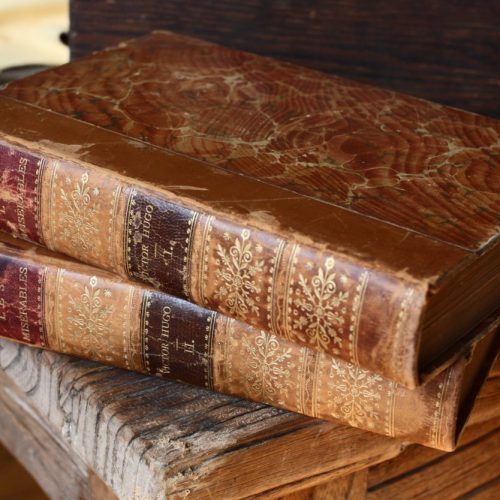
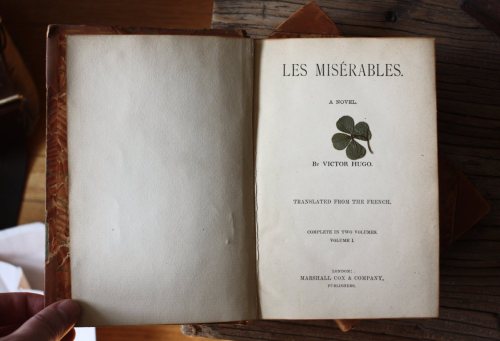
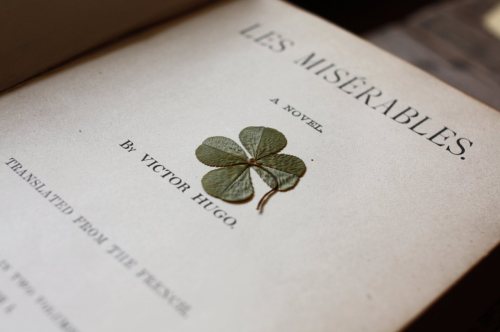
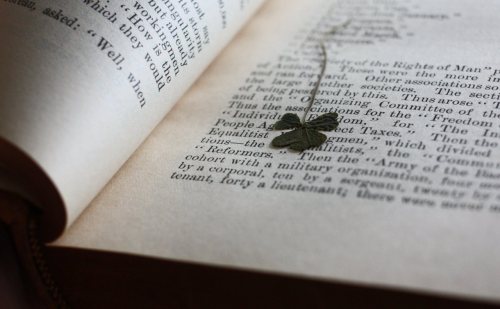
I just received a beautiful old edition of Les Misérables I’d ordered and, upon opening it, found a wonderfully well-preserved four-leaf clover at the title page – and another inside the second volume. The edition is from a little after 1890, but there’s no way of telling how old the clovers are; they’re quite brittle, though, so it’s clear they aren’t a recent addition. A very pleasant surprise that makes this already excellent copy even more precious. (larger images)
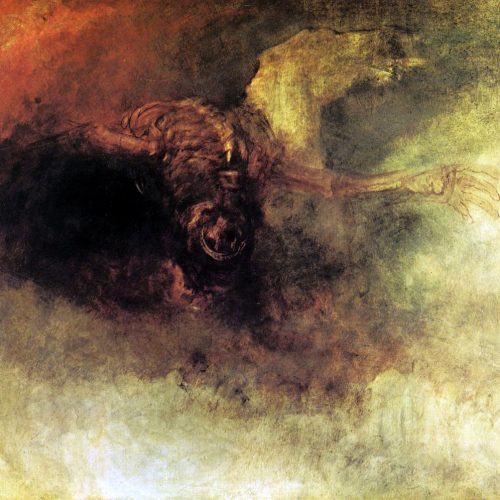
Death on a Pale Horse, J.M.W. Turner (1830)
Why Finish Books?
Tim Parks in the NYRB suggests that finishing a book may not be necessary to the aesthetic experience. I don’t agree with this line of thinking, that the concept of the art in question lies entirely with the reader or viewer. If a piece of art (i.e. a book or painting) is conceived as a whole and executed as a whole, then finishing it is necessary to understanding and appreciating that piece of art.
If you are not enjoying a book, feel free to put it down. I have many times. But I don’t pretend that I have formed a complete and valid judgment. I forfeit that when I fail to comprehend the work as a whole.
As for whether endings are “necessary” when you have enjoyed a book, it depends on how necessary the author intended it to be, not on whether (as the author was rightly, in my opinion, angered by) the reader felt they were “done.” It’s a bit like knocking the wings off a statue because you think it looks better that way. What you think looks better isn’t the point. The statue was created that way because that’s the way the creator conceived it.
Personally, I think it is critical to read every word as the author intended. Otherwise you are appointing yourself as editor over their artistic imagination. You are in charge of your own time and enjoyment, but not the structure and content of their work.
For what matter is it for us to know how high the Pleiades are, how far distant Perseus and Cassiopea from us, how deep the sea, etc.? We are neither wiser, nor modester, nor better, nor richer, nor stronger for the knowledge of it. What is astrology but vain elections, predictions? all magic, but a troublesome error, a pernicious foppery? physic, but intricate rules and prescriptions? philology, but vain criticisms? logic, needless sophisms? metaphysics themselves, but intricate subtleties and fruitless abstractions? alchemy, but a bundle of errors? To what end are such great tomes? why do we spend so many years in their studies? Much better to know nothing at all, as those barbarous Indians are wholly ignorant, than, as some of us, to be so sore vexed about unprofitable toys: stultus labor est ineptiatrum [it is foolish to labor at trifles], to build a house without pins, make a rope of sand, to what end? cui bono?
Anatomy of Melancholy
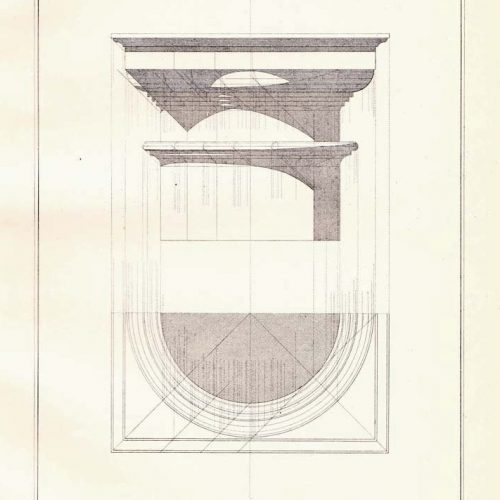
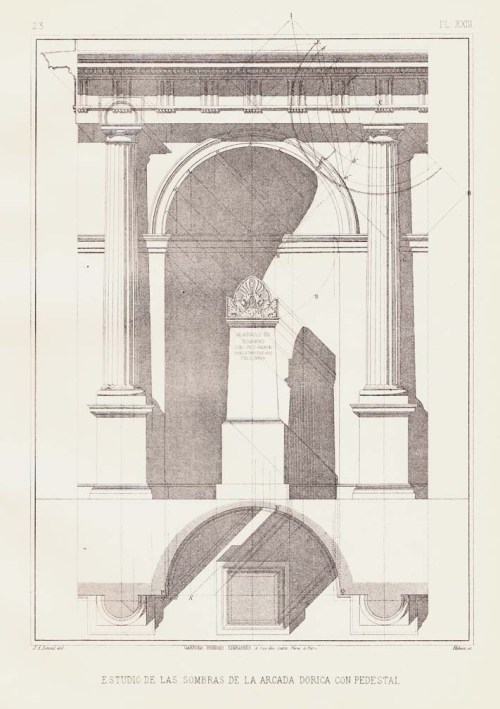
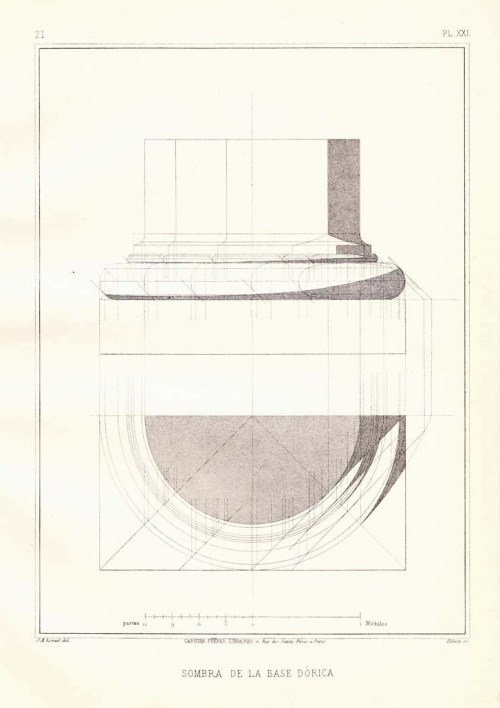
Shadow guide for Doric column and arcade (Canon of the five orders of architecture, Vignola, 1562)