Elvis Depressedly – “A Bible in a Bath of Bleach”
Mickey’s Dead

A minimal yet tone-rich album that sounds like it was recorded in a bedroom, Mickey’s Dead finds a middle ground somewhere between Sparklehorse and Midlake circa Bamnan and Silvercork. And despite the sad-sack trappings of the band’s name, the album’s name, and the song’s name, this isn’t some weepy tale of woe. (NB: be prepared to turn down the volume for the wash of distortion at the end) (bandcamp)

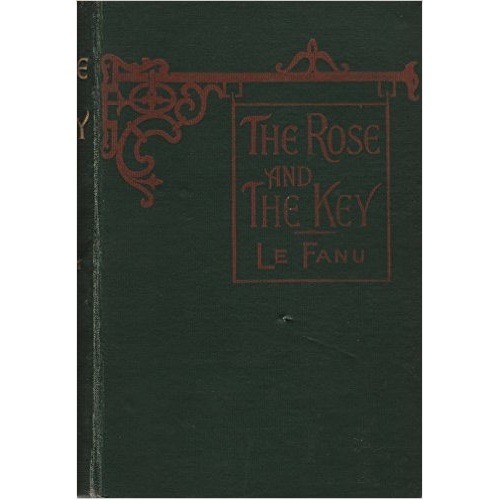
The Rose and the Key (Joseph Sheridan Le Fanu , 1871)


The name Joseph Sheridan Le Fanu is one that, today, hardly produces even a twinkling of recognition in the most word-worn eye. The author was, however, quite popular at the time he was most actively writing – the 3rd quarter of the 19th century – and he was, in particular, well known for his gothic romances. The genre was summed up fairly adequately by a friend of Vonnegut’s: “a girl takes a job in an old house and gets the pants scared off her” – but within that general framework there is much room for variation, as The Rose and the Key shows.

Uncle Silas is the most lauded of his books along these lines (though Carmilla gets love too) , and perhaps rightly so: of his novels I’ve read, Wylder’s Hand is entertaining but let down by unsatisfying villainy, and The Rose and the Key is, while similar to Uncle Silas in some ways, very different in tone. It is, however, a very entertaining frog-in-the-pot experience, effectively hiding the machinations and malice that mark the antagonists of gothic romances from the eye of both the reader and the main character.

Read more

Selected entries from Ambrose Bierce’s “Write It Right”

Ambrose Bierce was a good writer, but perhaps more important to him than the ultimate perceived quality of his writing was the pride he took in what he would call its precision. This quality he attempted to promote with a short usage volume entitled “Write It Right: A Little Blacklist of Literary Faults.”

Precision, he writes in the introduction, “is attained by choice of the word that accurately and adequately expresses what the writer has in mind, and by exclusion of that which either denotes or connotes something else. As Quintilian puts it, the writer should write so that his reader not only may, but must, understand.”

Thus, “capacity” should not be used when “ability” is meant, nor “continual” for “continuous,” and so on. The goal is not just successful communication, for which purpose even nonsense words will serve (and often do), but removing any possibility of misconstrual. It is worth noting that it is strictly for “serious discourse” such as news writing and letters that he advises, not poetry or other creative prose, in which creative or ambiguous usage is not discouraged (here, at least).

Read more

If it were not that every child of earth must learn wisdom for himself in the school of pain and labour, and if experience were orally communicable, as old people are prone to fancy, and if youth were less conceited and selfish, comparatively few foolish things would be done, and this life would lose, in a large measure, its efficacy as a place of discipline.

Thus, in the rough, the coarse old comedy is true; a great gulf separates age and youth. The youngsters will, to the end of time, prefer new lamps to old: they will trust their own senses, not yours. Buzz in the ears of your brood that flame burns and cobwebs catch. Their senses tell them that candlelight and warmth are pleasant, and liberty to fly high or low as one pleases; and, therefore, your love may as well be silent on those subjects. Otherwise you become, in their eyes, but a venerable muff and a bore. Nature has ordained that their nerves shall quiver, as yours have done, and their hearts thumb with fear; and when their turn comes they will scorch their wings, as you have, and make acquaintance with the spider.

Joseph Sheridan Le Fanu, The Rose and the Key

Vocabulary: Plaster & Pomander Edition

isinglass: gelatin made from the air bladders of fish (fr. Dutch huysenblas, ‘sturgeon-bladder’)
extravasate: for a liquid to be forced out of its proper vessel, as blood from artery into tissue
spokeshave: a plane with handles on each side for shaping spokes and like items
pomander: ball or container of aromatic substances carried to prevent infection
marl: to wind a rope, hitching every turn, with marlin, a light tarred rope
tierce: a third of a pipe of wine or liquid, amounting to about 42 gallons
teetotum: a four-sided top with letters on each side, used in gambling
bermoothes: certain islands, possibly fictional, possibly the Bermudas
bombazine: a twilled fabric, often black and often worn for mourning
embonpoint: plumpness (fr. French, en bon point, in good condition)
scoria: crust or slag leftover or rising atop smelted metal – or lava
puncheon: a cask holding 80 gallons, or simply that volume itself
calenture: fever or heat stroke encountered in tropical climes
obloquy: reproach or defamation, esp. from many unto one
ukase: an order or edict issuing from monarchy (esp. czars)
pantechnicon: van or warehouse used for storing furniture
marplot: one who defeats (mars) a plan or project (plot)
prelusive: introductory, i.e. pertaining to the prelude
diffide: to lack faith, or otherwise doubt or distrust
galliot: small ship propelled by both sail and oar
ope: archaic version of open, as hark to harken
scarlatina: another name for the scarlet fever
dudeen: a short-stemmed clay pipe
yare: quick or nimble, esp. of a ship
featly: skillfully, neatly, elegantly
holp: archaic past tense of help
bosky: wooded, bushy, shaded
avaunt: begone, away w’ye
malapert: overly saucy
leal: scots, loyal

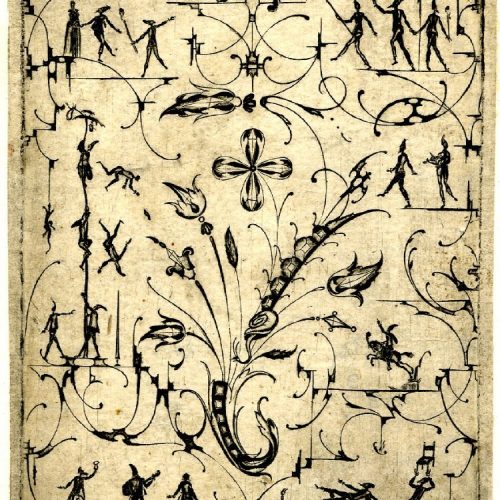
These grotesque yet delicate illustrations by J.K. Lambert are from Ingrid Lundgren’s “The Brothers Lionheart,” a favorite book from my childhood. I couldn’t find good copies of them online and so photographed them myself as best I could without taking the book apart.

Briana Marela – “Friend Tonight”
All Around Us

This Seattle singer-songwriter worked with Sigur Rós’s producer on All Around Us, and it shows – or rather, sounds. Gauzy, pitch-shifted, multi-layered vocals, reverse echoes, and muted, and heartbeat-esque beats are found all the way through — so if that’s not your style, keep on walking. The quieter moments strike a Julianna Barwick tone, while the poppier songs (like “Friend Tonight”) lean more toward the Hundred Waters/Sylvan Esso side. (jagjaguwar)

Flocks of birds fell like paper
Into the wells
And when I lifted the blue wings
I saw a growing grave.

Mahmoud Darwish, Birds die in Galilee

Battle of Mice – “At the Base of the Giant’s Throat”
A Day of Nights

This post-metal group’s creditable but unremarkable compositions are merely a noisy nest in which to cradle the unique voice of Julie Christmas. Switching between childlike whisper, death-metal scream, and breathy song in the recitation of lyrics rich in darkly poetic imagery, Christmas packs a frisson-inducing wallop. The 911 call that forms the coda of this song, apparently the climax of the spectacularly dysfunctional relationship behind the album, had me hovering over the pause button in terror. ACTUAL TRIGGER WARNING. “Sleep and Dream” is another, less disturbing standout. (neurot)

As debauchery often causes weakness and sterility in the body, so the intemperance of the tongue makes conversation empty and insipid.

Plutarch, Parallel Lives – Lycurgus

We come from night, we go into night. Why live in night?

John Fowles, The Magus

Vocabulary: Fisher Fowles Edition

chapfallen: having one’s jaw (chap) hanging out of exhaustion or disappointment
chlorotic: lacking coloration due to lack of iron, in either plants and people
picquet: also piquet, a two-player game played with a 32-card deck
osculation: in mathematics, to touch and share a tangent; to kiss
paregoric: medicinal opium originally prescribed to children
stylobate: a continuous base for a series of columns
rodomontade: a boast, or to speak or act boastfully
contumacious: stubborn or resistant to authority
algedonic: relating to both pleasure and pain
carious: decayed, esp. bones or teeth
apaugasma: a brightly shining light
puteal: a classical-style wellhead
batrachian: toadlike or froglike
desipience: folly or silliness
slammakin: loose or untidy
nacreous: pearlescent