Tame Impala – “Feels Like We Only Go Backwards” – Lonerism
(Source: https://www.youtube.com/)
Tame Impala – “Feels Like We Only Go Backwards” – Lonerism
Helvetia’s Dream – a captivating time-lapse video of Switzerland. Love the meteor at 0:46.
Wye Oak – “Talking About Money”
The Knot
It’s uncommon that I’m exposed to an artist through their latest album, but then find I prefer their earlier work — especially when the latest album is as good as Wye Oak’s Civilian. But The Knot does everything Civilian does, with more variety, grandeur, and power in general. From the setup and punchline of the first two tracks to the unbelievably confident “Talking About Money” to the shoegazer “Mary Is Mary” and triumphant “Tattoo,” there is hardly a misstep on the album and a surfeit of just plain excellent music. (insound)
Murcof – “Spring In The Artificial Gardens”
The Versailles Sessions
The occult quasi-baroque meanderings of The Versailles Sessions seem a strange sequel to Murcof’s dubby, Loscil-esque Martes and Remembranza. But a lot can change in a few years, and the artist’s experimental leanings were already evident. Still, it’s a fairly baffling 50 minutes. The focus is on space and ambience, not (as the compelling but ultimately frustrating “Louis XIV’s Demons” shows early on), and this track embodies that without being terminally weird.
My friends, Providence is put to his trumps. A revolution, what does that prove? That God is hard up. He makes a coup d’état because there is a solution of continuity between the present and the future, and because he, God, is unable to join the two ends.
And to see so much discomfort above and below, so much rascality and odiousness and stinginess and distress in the heavens and on earth… to see winter, which is nothing but a rent in the zenith through which the wind blows, to see so many tatters even in the brand new purple of the morning on the tops of the hills, to see the dew drops, those false pearls, to see the frost, that paste, to see humanity torn, and events patched, and so many spots on the sun, and so many holes in the moon, to see such misery everywhere — I suspect that God is not rich.
He keeps up appearances, it is true, but I feel the pinch. We must not judge the gods from appearances. Beneath the gilding of the sky I catch a glimpse of a poor universe, Creation is bankrupt. That is why I am malcontent.
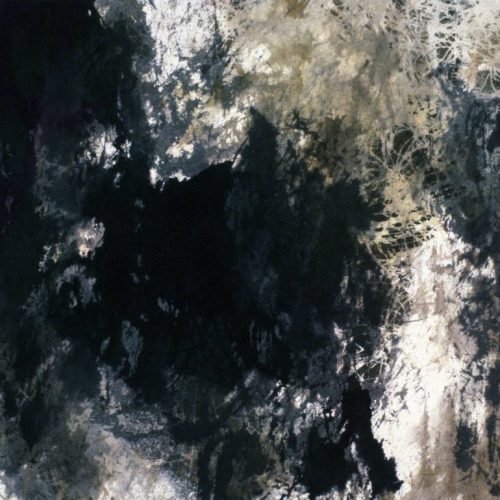
Abstract painting in grey, brown, and black – Feng Zhongrui (1966)
Marielle V Jakobsons – “Crystal Orchard”
Glass Canyon
An ethereal but sonically fascinating album. Jakobsons creates wonderful atmospheres, and the journeys through those soundspaces occasionally resemble songs. The first three tracks (this is the second) are especially intriguing. (experimedia)
Society is produced by our wants, and government by our wickedness; the former promotes our happiness positively by uniting our affections, the latter negatively by restraining our vices.
Society in every state is a blessing, but government even in its best state is but a necessary evil — in its worst state an intolerable one — for when we suffer or are exposed to the same miseries by a government, which we might expect in a country without government, our calamities are heightened by reflecting that we furnish the means by which we suffer.
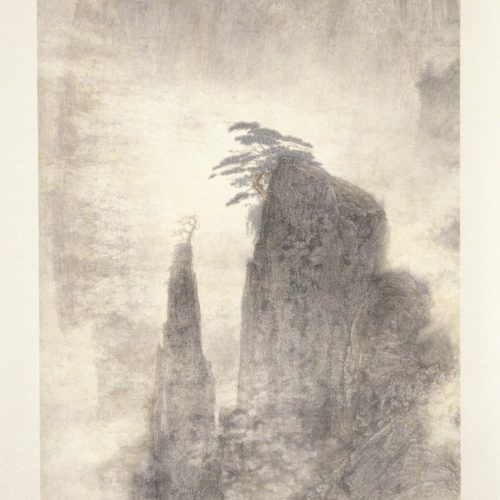
The silence of pines on remote peaks, Li Huayi (1999)
Sin Fang – “Strange House”
Half Dreams
An excellent EP packed with some just plain great songs. This one in particular has a wonderfully varied structure, swinging from jangle to piano-and-surf to Elephant 6 psych. Calming but still upbeat and musically interesting. (insound)
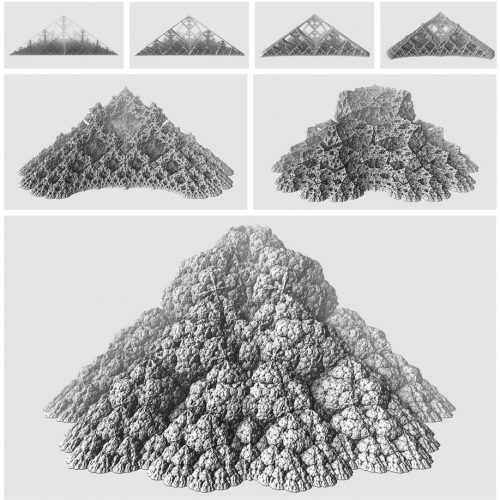
Recursive pyramid, Tom Beddard
Stacked frames from the International Space Station (Cristoph Malin) – shades of hyperspace
You tell me of degrees of perfection to which human nature is capable of arriving, and I believe it, but at the same time lament that our admiration should arise from the scarcity of the instances.
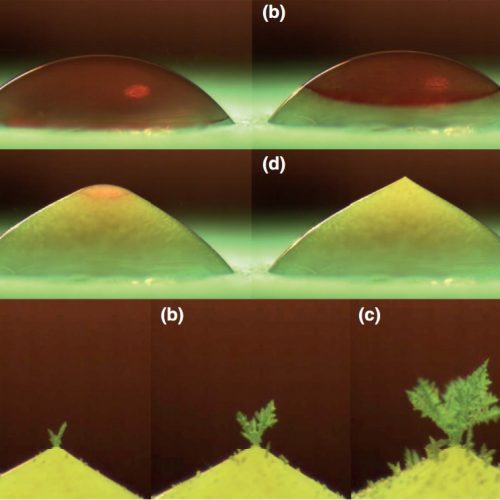
A drop of water freezing at -20°C over 18 seconds, forming an ice tree (Science)
I and the public know
What all schoolchildren learn,
Those to whom evil is done
Do evil in return.
Maskwell: Cynthia, let thy Beauty gild my Crimes; and whatsoever I commit of Treachery or Deceit, shall be imputed to me as a Merit — Treachery, what Treachery? Love cancels all the Bonds of Friendship, and sets Men right upon their first Foundations.
Efterklang – “Sedna”
Piramida
I’ve discarded two whole albums from Efterklang due to a lack of focus, which the earlier Tripper, by contrast, had in excess. “Sedna” is the first new song by them that has not only arrested my attention but truly sounds Efterklang-y to me, yet evolved and different. Imagine Talk Talk mixed with DNTEL — understated and beautiful. Also look for the almost Graceland-esque “Dreams Today.” Great cover art, too. (insound)
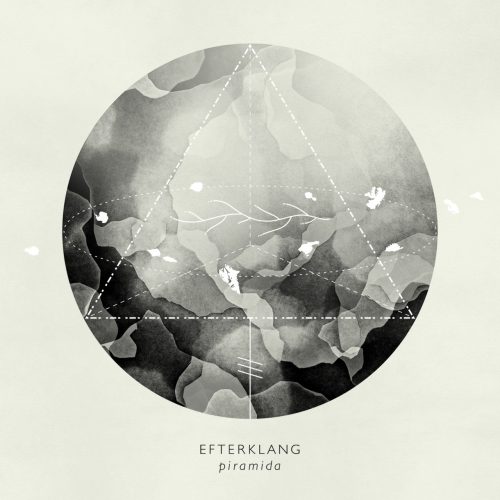
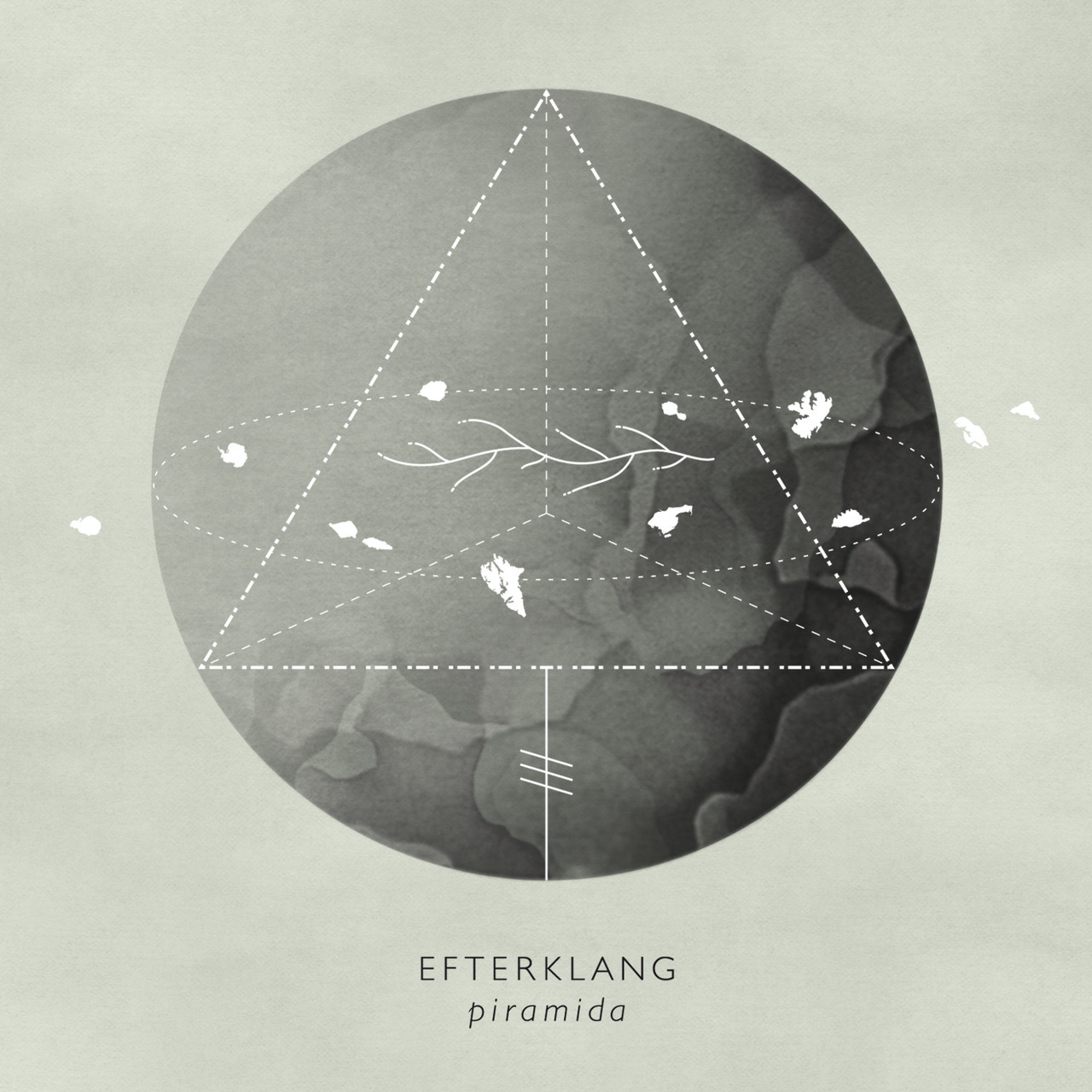
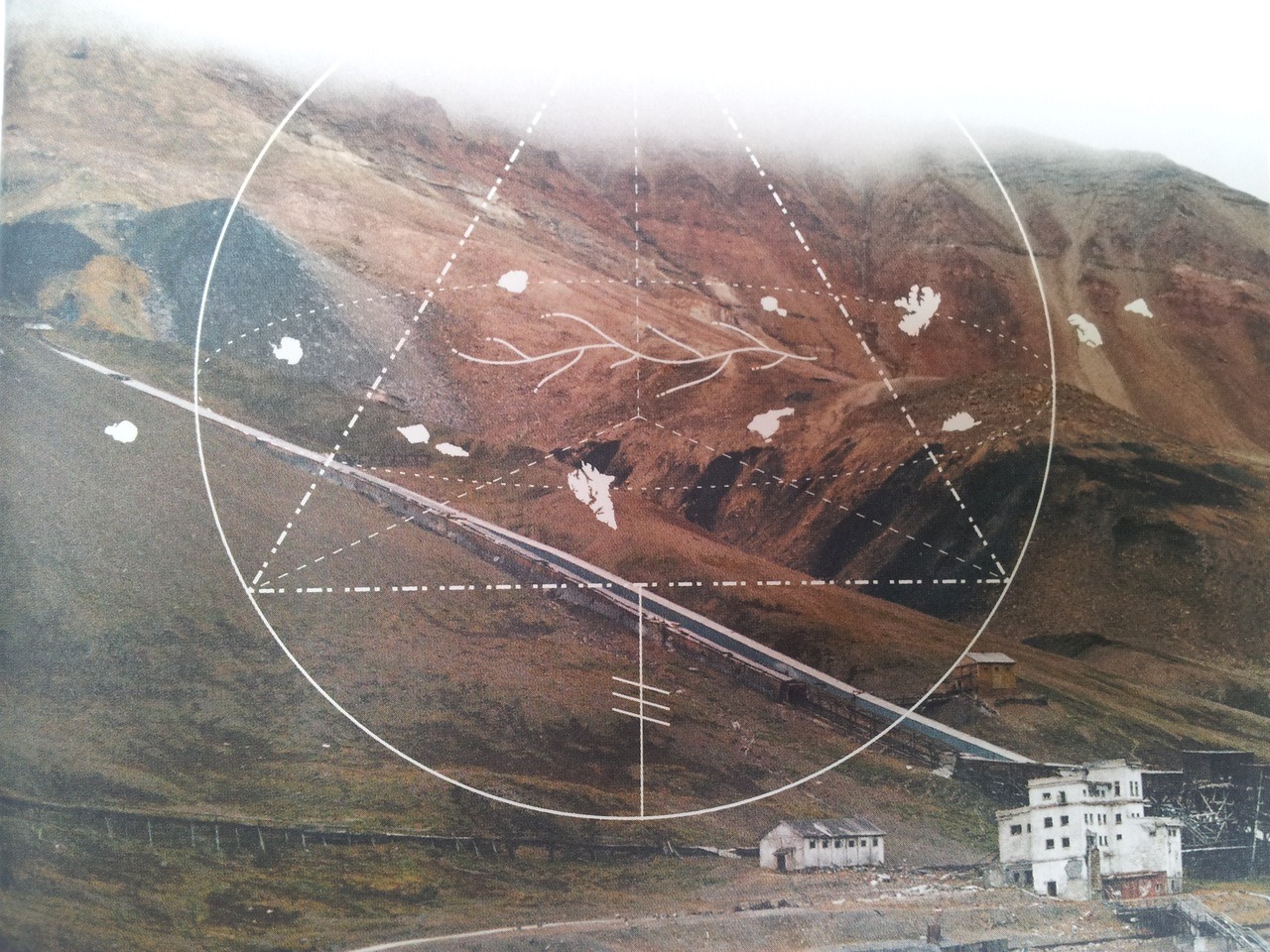
Three variations of the cover art for Efterklang’s album Piramida
Because fear and conspiracy play no part in your daily relations with each other, you imagine that the same thing is true of your allies, and you fail to see that when you allow them to persuade you to make a mistaken decision and when you give way to your own feelings of compassion, you are being guilty of a kind of weakness that is dangerous to you and that will not make them love you any more. What you do not realize is that your empire is a tyranny exercised over subjects who do not like it and who are always plotting against you; you will not make them obey you by injuring your own interests in order to do them a favor; your leadership depends on superior strength and not on any goodwill of theirs.
Johann Sebastian Bach – “Prelude #1 In C major”
The Well-Tempered Clavier
The opening track from Bach’s historic collection of keyboard pieces is a simple and delicate piece, but with lots of room for expression. Glenn Gould plays it crisply on the piano, but with a precious air, and at any rate I prefer the richer overlapping tones of the harpsichord. This is a nice recording, but it was Luc Beausejour’s that originally caught my ear.