Frederic Chopin – “Mazurka in D minor, Op. 33 no. 2”
A short ride in an modest (but elegant) brougham.
Frederic Chopin – “Mazurka in D minor, Op. 33 no. 2”
A short ride in an modest (but elegant) brougham.
With such deceits he gain’d their easy hearts,
Too prone to credit his perfidious arts.
What Diomede, nor Thetis’ greater son,
A thousand ships, nor ten years’ siege, had done—
False tears and fawning words the city won.
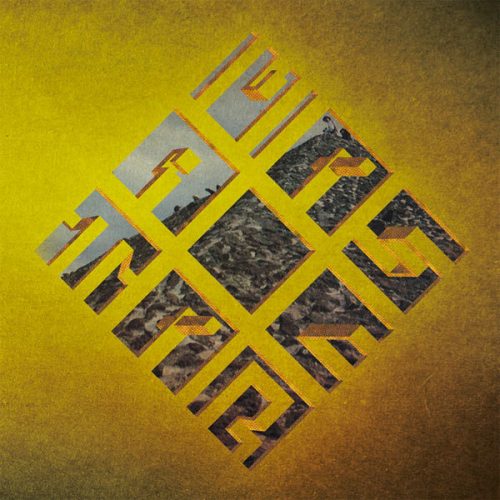
Givers – “Ripe”
In Light
From an uncertain beginning (on both the album and this song), a confident and memorable song. Once it actually starts moving, about a minute in, this catchy tropical romp demonstrates a surprising breadth of sounds, and some effervescent, precise guitar/vocal interplay. (insound)
Truth, Sir, is a profound Sea, and few there be that dare wade deep enough to find out the bottom on’t. Besides, Sir, I’m afraid the Line of your Understanding mayn’t be long enough.
They have also ascribed divinity, and built temples to mere accidents and qualities, such as are time, night, day, peace, concord, love, contention, virtue, honour, health, rust, fever, and the like; which when they prayed for or against they prayed to, as if there were ghosts of those names hanging over their heads, and letting fall or withholding that good or evil for or against which they prayed. They invoked also their own wit by the name of Muses, their own ignorance by the name of Fortune, their own lust by the name of Cupid, their own rage by the name of Furies, their own privy members by the name of Priapus; and attributed their pollutions to Incubi and Succubæ: insomuch as there was nothing which a poet could introduce as a person in his poem which they did not make either a god or a devil.
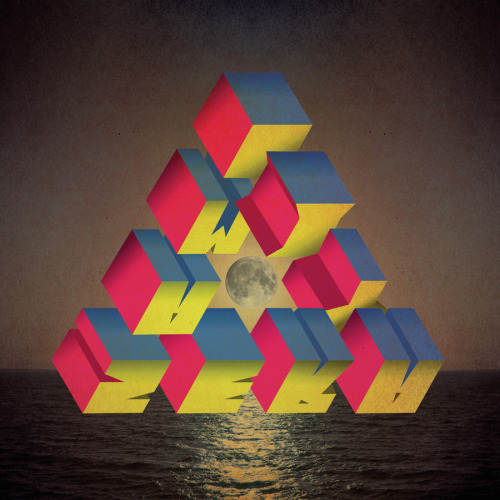
Ms. John Soda – “Elusive”
No P. Or D.
This old (2002) album is still my favorite of Ms. John Soda’s; others I’ve listened to have continued the sound, but the well-crafted lap-pop of “Misco” and “Elusive” is as fresh today as it was nearly 10 years ago, and the rest of the album is still solid. I like the little fade-out on this one, mirroring the fade-in of the first track. (insound)
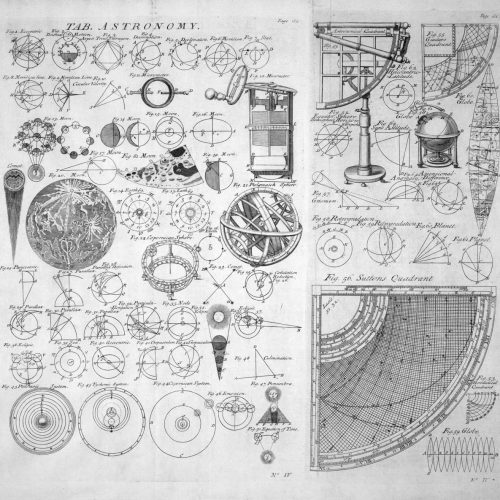
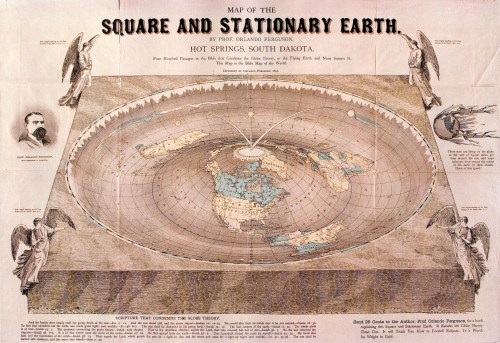
Table of Astronomy, Cyclopedia (original)
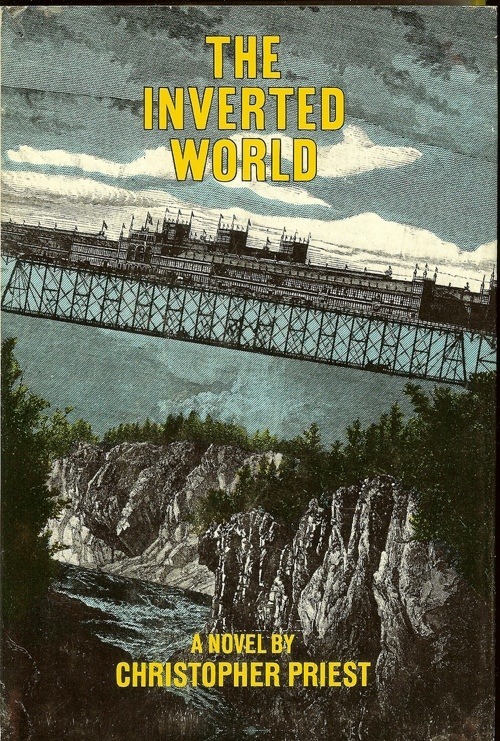
The progenitors of science fiction had more right to call it “speculative” than the technobabblers of today who flinch at the apparently derogatory term sci-fi. Novels like Frankenstein, The Invisible Man, and 20,000 Leagues Under The Sea showed how man and the world would naturally react given the novel stimulus of an impossibility turned possible. Change one thing and watch events play out naturally with normal people, with the narrative usually some distance past the actual change. Now it seems that authors change everything but the stories; switch up everything in the universe and watch the old familiar thriller play out as it has for hundreds of years. Having learned nothing about The Inverted World before reading it, I wasn’t sure which to expect. As it turns out, it’s among the best examples of the old sci-fi I’ve ever read.
It won’t do to discuss the plot, though it’s not much of a spoiler to say that the main character is a denizen of “the city,” a large complex that must be slowly moved along rails northward, to escape a mysterious danger seemingly approaching from the south.
The world building is by the numbers at first, and the writing is unremarkable (and occasionally imprecise), but competent, and dialogue is good. Slowly, the secrets of The Inverted World are revealed to both the protagonist and the reader, and the process is so incredibly compelling that I read some 200 pages in a day, then finished it off just a few minutes ago.
To describe the book further would be to spoil the fun, though there’s no twist exactly, as one finds in movies these days, but rather a logical exposition of the nature of things, and it is both fun to read and interesting to unravel. Most importantly, the problems of this book, and of the world described, are problems that can only occur within the compass of this book and world. There is very little contemporary allusion, or borrowing, or padding with long descriptions of fights and events which, while exciting, are not strictly speaking consequential to the story. This flaw hobbled The Gone-Away World, which has a cloak of grandness but loses itself in minutiae (and for the record, seems to have taken several ideas from Priest’s book).
I’ve only read a few books this quickly in my life, which is certainly a compliment, yet at the same time I never felt it was fluff (as much modern sci-fi is) or overly taxing (as Last and First Men, and Book of the New Sun are). I’ll be recommending this to all of my friends who like an occasional break from contemporary and traditionally-set literature.

What happens, exactly, when every individual is not only a node connected to a worldwide network, but is also able to take anything they see and cause it to be made public and (efforts are made in this direction) unable to be taken down? The consequences are complex and far-reaching, and we would do well to start thinking about them now.
The Holy Mountain
‘Tis one thing to copy, and another thing to imitate from nature. The copier is that servile imitator, to whom Horace gives no better name than that of animal; he will not so much as allow him to be a man. Raphael imitated nature; they who copy one of Raphael’s pieces, imitate but him, for his work is their original. They translate him, as I do Virgil; and fall as short of him, as I of Virgil. There is a kind of invention in the imitation of Raphael: for though the thing was in nature, yet the idea of it was his own. Ulysses travel’d, so did Aeneas; but neither of them were the first travelers: for Cain went into the land of Nod, before they were born: and neither of the poets ever heard of such a man. If Ulysses had been kill’d at Troy, yet Aeneas must have gone to sea, or he could never have arrived in Italy. But the designs of the two poets were as different as the courses of their heroes, one went home, and the other sought a home. To return to my first similitude. Suppose Apelles and Raphael had each of them painted a burning Troy; might not the modern painter have succeeded as well as the ancient, though neither of them had seen the town on fire? for the draughts of both were taken from the ideas which they had of nature. Cities had been burnt before either of them were in being.
Sister Crayon – “(In) Reverse”
Bellow
With shades of Nudge, but with more of a focus on the vocalist’s soft but soaring voice, Sister Crayon’s Bellow is a thoroughly pleasant album which, while it rarely ventures too far in any direction, succeeds very well at what it does. There are a few times when they transcend their own type – the brief ending revel of “Stem,” or the mechanical repetition of “Anti-Psalm,” but for the most part it’s just a beautiful place to inhabit for an hour or so. (insound)
The Internet Archive To Archive Itself On Paper
“Internet Archive is building a physical archive for the long term preservation of one copy of every book, record, and movie we are able to attract or acquire. Because we expect day-to-day access to these materials to occur through digital means, the our physical archive is designed for long-term preservation of materials with only occasional, collection-scale retrieval. Because of this, we can create optimized environments for physical preservation and organizational structures that facilitate appropriate access. A seed bank might be conceptually closest to what we have in mind: storing important objects in safe ways to be used for redundancy, authority, and in case of catastrophe.”
apothegm: a cryptic or pithy, yet instructive, remark or phrase
venditate: to announce or cry out, or to exhibit or blazon
cicisbeo: the escort or lover of a married woman
cark: to care or worry, or a care or worry
disembogue: to discharge or flow forth
badinage: playful banter or raillery
tontine: a type of shared annuit
emmet: archaic term for an ant
tetric: harsh, sour, or rough
halser: rope
There are surely other worlds than this: other thoughts than the thoughts of the multitude, other speculations than the speculations of the sophist. Who then shall call thy conduct into question? who blame thee for thy visionary hours, or denounce those occupations as a wasting away of life, which were but the overflowings of thine everlasting energies?
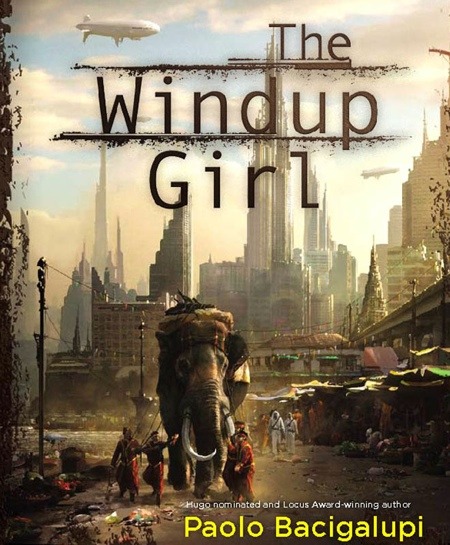
The Wind-Up Girl came highly recommended by my family, and of course the usual breathless praise from within the sci-fi community made it out to be nothing less than a Neuromancer for this modern age. Biopunk, a dystopian future made from only the freshest fears of the present. It partially delivers on this promise, but also fails in the ways modern books I’ve read recently tend to fail.
The premise is certainly the best part of the book. Some distance into the future, perhaps a hundred years or so, bioengineered crops and organisms have supplanted natural ones, giving rise to new plagues and food shortages — not to mention a rising sea due (I assume) to global warming. The result is the “Contraction,” a reversal of the “Expansion” era of our day. Fuel and power are precious and the universally acknowledged currency is calories. The story takes place in Krung Thep, AKA Bangkok, in Thailand, where the Thai have maintained independence by ingenuity, independence, and grit. And, as a new and disease-resistant fruit introduced at the outset suggests, a seedbank and skilled bioengineers.
Unfortunately, the book never really delivers on its promises. The landscape is foreign in a way, but also filled with the lazy analogues endemic to modern sci-fi. The “kink-springs,” for instance, are nothing more than batteries, no matter how named. The privations of the Contraction are no barrier to most of the characters, poverty and heat seeming to be the main difficulties — whenever a “rule” of the new world is inconvenient, it is discarded, and guns, cars, and other things that should be impossible in this new world regularly appear; one is not convinced of their rarity simply by the characters gasping at their appearance. And the story itself is easily abstractable from the world; the Environment Ministry (the “White Shirts”) and Trade Ministry could just as easily be Pepsico and Coca-Cola, or Boeing and Northrup Grumman, since the conflict is more or less political. That’s where the book fails: despite the well-conceived backdrop, very seldom in The Wind-Up Girl (an almost peripheral character, incidentally) does anything happen that couldn’t happen in any other book or world. In the end, the meat and potatoes are generic thriller, and the bioengineering and global cataclysm are simply sauce.
The writing is also spotty. Like so many modern books, whatever isn’t a labor of love (often the premise and a couple inspired characters or situations) is filler, and you can tell when Bacigalupi is writing something he doesn’t particularly care about. There are a few nice turns of phrase here and there, and the beginning hints at a fragmented timeline that is abandoned shortly. He lacks variety in his phraseology as well (towards the end of the book, during a firefight, I read the word “chatters” at least six or seven times in the space of a few pages), and the dialogue is totally undifferentiated. Every character speaks in the same voice, though their internal narration is better.
Bacigalupi has written several other stories that take place in this world, and it seems to me that his great accomplishment was painting the background, but he has yet to actually produce anything but sketches in the foreground. For world-building, he gets a gold star, but for storytelling, no credit. Other modern sci-fi I’ve read has the same prose shortcomings, but in the Virga trilogy (and even in Mainspring, an inferior book by far) the story was unique to the situation. Not so here.