The bold they kill, th’ unwary they surprise;
Who fights finds death, and death finds him who flies.
Dryden’s Æneid
The bold they kill, th’ unwary they surprise;
Who fights finds death, and death finds him who flies.
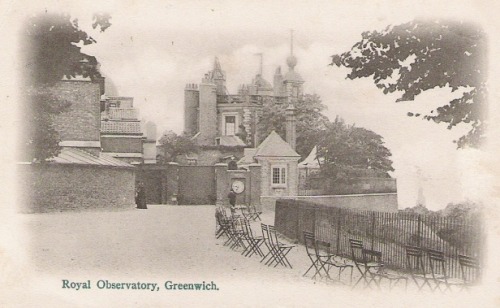
When you really come down to it, there really isn’t much to The Secret Agent, Conrad’s schizophrenic ensemble piece describing several “anarchists” in a sort of imagined historical account of the real Greenwich Observatory bombing of 1894. Yet its pages are rich and meticulously crafted, full of detail which could only be supplied by someone completely involved with his work. The framework of the novel, though, its “skeleton,” as Conrad refers to it in a conciliatory 1920 preface, is only the barest suggestion of a story. The title might lead you to think it’s a tale of espionage and high drama, but in fact it’s more of a progression of baroque character studies.
Conrad’s justification (for following reviews savaging the book for its supposed depravity and lack of any sort of real edification, he felt the need to append one) was simply that, having been told a few details of the bombing, he felt a set of characters and actions evolve in his head surrounding that “blood-stained inanity,” and simply set pen to paper. It was written quickly and fairly continuously, a fact that shows in the unvarying tone and inspired feel of the writing.
The perspective is one of omniscience, and Conrad puts his characters under the glass so minutely that pages and pages of description, narration, and thoughts will separate two lines of dialogue. It’s almost as if Conrad is narrating a film, and feels the need to stop it constantly in order to explain what you’ve missed. This applies to inconsequential events as well as serious ones: the detail with which the grotesque cab driver is rendered (a perfectly Dickensian caricature) is equal to that of the difference between the moral imperatives driving Chief Inspector Heat and the Assistant Commissioner. And while the former is certainly of a lesser fundamental weight than the latter, both are treated with the same slightly removed tone of levity that pervades the whole book. Conrad is a funny guy, it turns out, and though the events described might be of the most terrible import, they are all the same to our amused narrator.
It’s not a quick read, though it isn’t a particularly long book: my cheap Dover edition is around two hundred pages, and more normally-printed ones probably will reach three hundred or more. The subtitle for the book is “A Simple Tale,” and indeed the tale is simple, but the writing is dense and each sentence seems absolutely necessary. While in other books I can get away with accidentally skipping a sentence or two after looking away to pick up my coffee or what have you, in The Secret Agent I would immediately get lost. And yet so much of the book is completely irrelevant to every other part! Don’t ask me why it is this way, it just is.
The espionage and action in the book is so minimal that anyone looking for a thrill will be disappointed. The plot never takes off, but on the other hand, the plot is more of a red herring, a nail from which to hang the rest of the book. There’s a lot to like about The Secret Agent, but the independence of each enjoyable element robs it of profundity. That said, if you like the way Conrad writes in general — well, he wrote this.
An impudent fellow may counterfeit modesty, but I’ll be hanged if a modest man can ever counterfeit impudence.
Pelt – “True Vine”
Ayahuasca
Somewhere between the Eastern frenzy of Shalabi Effect and the supernatural introspection of Charalambides lies Pelt, whose string-and-feedback drones and acoustic soundscapes are difficult to pin down in any way. “True Vine” is my favorite of their long tracks (though there are several good ones), with its menace and beauty in perfect solution. It’s like watching the world burn, through a silk veil.
shagreen: skin of sharks or rays used as an abrasive; also, a coarse, granular leather
macumba: a Brazilian cult that combined Christianity with occult practices
argolic: pertaining to Argolis, a southeastern district of ancient Greece
bolection: a raised molding surrounding a door, panel, window, etc
furbelow: a ruffle or showy bit of trimming, as on a woman’s dress
catoptric: the study of optics as created by or related to mirrors
conchologize: to take part in the collection and study of shells
polyantheon: undefined, but presumably “many-flowered”
garzoon: corruption of an oath, probably “God’s wounds”
cachinnation: a loud, improper, or uncontrolled laugh
impecunious: having (or yielding) little or no money
trivant: archaic version of “truant”
quillet: a subtlety or quibble
Reason is a faculty which is sufficient for its own purposes. Its operations originate from itself, and proceed directly to the end proposed; whence those actions, which are directed by this faculty of reason, are called right actions, as expressive of that rectitude and simplicity with which they are performed.
Here and to the southward the neighbourhood became better, flowering at last into a marvellous group of early mansions; but still the little ancient lanes led off down the precipice to the west, spectral in their many-gabled archaism and dipping to a riot of iridescent decay where the wicked old water-front recalls its proud East India days amidst polyglot vice and squalor, rotting wharves, and blear-eyed ship-chandleries, with such surviving alley names as Packet, Bullion, Gold, Silver, Coin, Doubloon, Sovereign, Guilder, Dollar, Dime, and Cent.
A square peg forced into a round hole, he had felt like a daily outrage that long-established smooth roundness into which a man of less sharply angular shape would have fitted himself, with voluptuous acquiescence, after a shrug or two.

“I come, I come,”
And a maiden sat in her summer bower,
In the changeful gleam of the twilight hour,
And joy was in her home.Afar, afar,
From her happy cot, ‘mid the clustering vines,
where the pale moonbeam in silver shines,
She gazed on each bright star.A gentle prayer
On the low night wind as it murmur’d by,
Like the sound of some passing spirit’s sigh,
She whisper’d softly there.An icy breath,
A hurrying wing, as of speedy flight,
A darkness shrouding a sunny light,
And the maiden sleeps in death.“I come, I come,”
And a child with eyes like the sky’s own blue,
Sat playing amid the flowers, and dew,
And peace was in his home.Loudly, and wild,
A burst of joy thro’ the calm air thrills,
And echo’d by mountains, vales, and hills;
‘Twas the laughter of a child.Silent, and hush’d,
The air blows chill, and the flowers depart,
And the stream grows still at the child’s glad heart,
And death the blossoms crush’d.“I come, I come,”
And a worn old man with his locks of gray,
On a bed-rid couch at morning lay,
And quiet fill’d his home.He dream’d of joy;
And the sunny light of his childhood’s track
To his fading vision came brightly back,
And he dream’d he was a boy.His eye grew dim,
And a sudden shuddering o’er him crept,
A gentle sigh—and the old man slept,
For death had shrouded him.“I come, I come,”
It came like the blast of the dread simoom,
A trumpet tone from the hiding tomb,
And a sadness fill’d each home.
The Cry of Death, Catherine H. Waterman
Julianna Barwick – “White Flag”
The Magic Place
This album, mostly vocal, is unique and compelling but not an everyday listen. As the title suggests, it’s a “place” rather than, say, an adventure or experience, and each song seems to describe a different set of surroundings. White Flag seems vaguely African (in a “Graceland” way) while the title track is like a stone church. At any rate, it’s a relaxing and soft album and this is a good song. (insound)
In defense of HBO’s “unnecessary” nudity
“For the record, I don’t have a problem with any of the violence or language on ‘Game of Thrones,’ either; it’s set in a Dungeons and Dragons-flavored version of Hobbes’ State of Nature, and as such, we should expect to see elemental human activities depicted often, and with gusto, and if we have a problem with that, we shouldn’t be watching. I just find it grimly amusing that, for whatever reason, sex and nudity must be handled with special care, and must always be ‘necessary’ and utterly unimpeachable in their presentation, yet profanity and violence are rarely held to such such standards. This is America’s Puritan mentality coming home to roost in criticism. Closeups of throats being slit and limbs being lopped off are an expected part of R-rated entertainment aimed at adult viewers, and not even worthy of comment. But nudity and sex must be ‘justified.’”
Probably won’t settle this silliness, but worth reading.
Do not therefore consider this life as an object of any moment. Look back on the immense gulf of time already past; and forwards, to that infinite duration yet to come, and you will find how trifling the difference is between a life of three days and of three ages.
Let us then employ properly this moment of time allotted us by fate, and leave the world contentedly; like a ripe olive dropping from its stalk, speaking well of the soil that produced it, and of the tree that bore it.
It was a very trying day, choked in raw fog to begin with, and now drowned in cold rain. The flickering, blurred flames of gas-lamps seemed to be dissolving in a watery atmosphere. And the lofty pretensions of a mankind oppressed by the miserable indignities of the weather appeared as a colossal and hopeless vanity deserving of scorn, wonder, and compassion.
When the mind or ruling principle is properly regulated, it can with ease and at any time adapt itself to the various events of life, which are presented to it for the subject of its operations. For it is not particularly attached to any one subject or mode of action. It exerts itself with a preference indeed on things more agreeable, but with a reserve of acquiescence; and if chance throw anything of a contrary quality in its way, it takes that for the subject of its philosophy to work upon; which, like a strong fire, converts and assimilates that to its own substance, which would extinguish a slight flame, triumphs over all resistance, and becomes more brilliant by this addition of combustible matter.